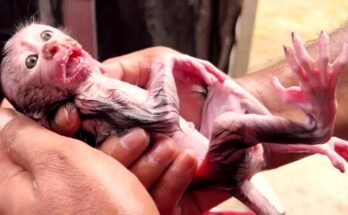
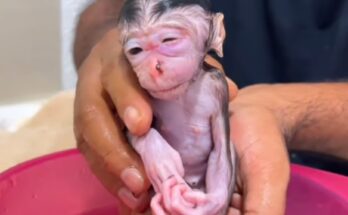
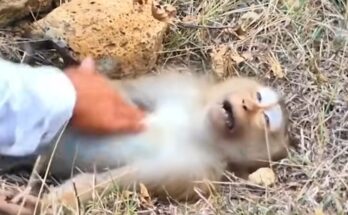
To our human eyes, the scene is nothing short of monstrous. A mother monkey, instead of cuddling her newborn, pushes it away with sharp slaps. When the infant cries and tries to cling to her, she peels its tiny hands off her fur and lets it tumble onto the hard branch below. The baby’s desperate wails seem to mean nothing to her. It’s heartbreaking. Our immediate, emotional judgment screams: This mother monkey must be crazy! How can she treat her own child so cruelly?
However, this seemingly brutal behavior is not madness or cruelty in the context of the wild. It is often a severe, last-ditch survival strategy driven by the harshest of instincts. The mother may be malnourished, sick, or desperately stressed. Her body knows she cannot produce enough milk, and her energy is barely enough for her own survival. Continuing to care for a demanding infant would mean the certain death of them both. Her apparent rejection is a tragic, instinctual calculation to cut her losses and preserve her own life for potential future offspring.
Alternatively, she may sense something is profoundly wrong with the infant. If the baby is extremely weak, has a birth defect, or is ill, her instincts may drive her to abandon it. In the brutal arithmetic of nature, investing precious resources in an offspring unlikely to survive jeopardizes the entire family line. What looks like heartless cruelty is a form of tragic triage.
For the infant, this rejection is a death sentence. It will cry until it is hoarse, confused and starving, its heartbreaking whimpers a plea for a care that will never come. This is where human compassion can intervene, providing the bottle, the warmth, and the safety the biological mother could not.
So, while our hearts break to see a mother treat her child this way, it is rarely “crazy.” It is nature at its most severe and unsentimental—a stark reminder that in the wild, the drive to survive can override even the powerful bond of motherhood, creating scenes of profound tragedy that challenge our very understanding of love and cruelty.