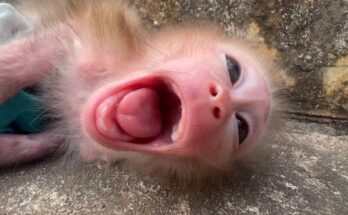
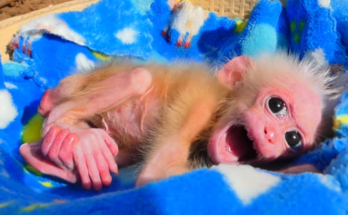
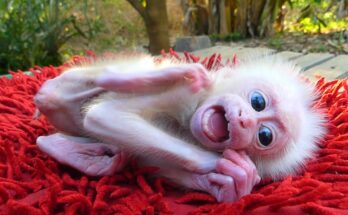
The call came in as an emergency confiscation. When the wildlife rescue team arrived, they found a cramped, filthy cage. Inside were two infant monkeys, their eyes wide with a terror that went beyond hunger or cold. They had been torn from their troop by hunters, likely destined for the illegal pet trade. While both were traumatized, one infant’s condition was critically dire. His tiny left hand was a grotesque, blackened claw—a severe case of necrosis.
The hunters’ crude snare, a tight wire noose, had not just trapped him; it had cut off all circulation. Over days, without treatment, the tissue had died. The necrotic hand was cold, shriveled, and smelled of decay, a stark contrast to the warm, living fear in the baby’s eyes. It was a slow, agonizing injury that spoke of profound neglect.
The rescue was a race against septic shock. At the clinic, the veterinarians knew amputation was the only option to save his life. The necrotic tissue was releasing toxins into his bloodstream. Gently sedated, the tiny patient underwent surgery. The team carefully removed the dead hand, cleaning and shaping the stump to heal properly. It was a devastating but life-saving loss.
Post-surgery, the baby—named Kano—faced a long road. He received strong antibiotics, pain management, and round-the-clock care. His other wounds, from the cage and rough handling, were treated. His sibling, physically unharmed but psychologically scarred, stayed close, offering a primal comfort.
Today, Kano is learning to adapt. He uses his remaining hand and his feet with remarkable dexterity. The necrosis is gone, replaced by clean, healed skin. While the memory of the hunters and the loss of his limb will always be part of his story, it no longer defines his future. His rescue was an intervention not just against cruelty, but against a creeping death. From the grim reality of a necrotic hand, Kano is being given a chance to grasp life again.