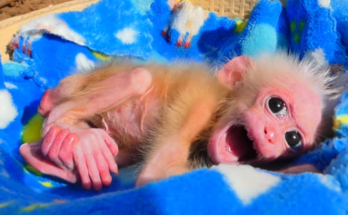
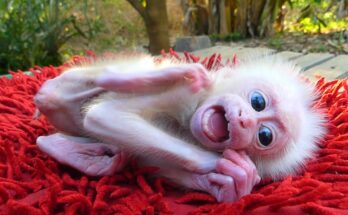
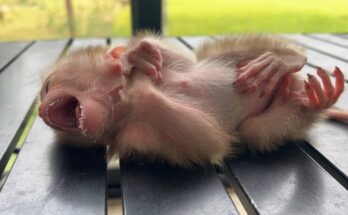
In the dense thicket at the edge of a village, a heartbreaking discovery was made: two tiny, shivering baby monkeys, huddled together for warmth. They were the picture of vulnerability—abandoned by their troop and visibly injured. One had a swollen, wounded leg, likely from a fall or trap, while the other was frail and dehydrated, its eyes dull with exhaustion. Left alone, their chances of survival were nearly zero.
But fate intervened. A local farmer, hearing their faint, pitiful cries, found the duo and immediately contacted a wildlife rescue network. Within hours, a team arrived. The infants were luckily rescued by humans who understood the urgency of their condition. Gently, they were placed in a soft carrier, their terrified eyes slowly blinking at their strange new helpers.
At the rescue center, the extent of their plight became clear. The injured leg was cleaned and bandaged, and X-rays revealed a small fracture that was carefully splinted. Both babies were dehydrated and malnourished, so they were given subcutaneous fluids and placed under warming lamps. They were luckily rescued just in time—infection and starvation were already setting in.
Named Kaya and Milo, they began their long road to recovery. Fed a special formula every few hours, they slowly gained strength. Their wounds healed, and their fearful silence gave way to soft, curious chirps. Human caregivers provided not just food and medicine, but also the grooming and comfort their own mother could not.
Today, these poor baby monkeys are thriving. They play together in a safe enclosure, climb on soft structures, and have learned to trust the humans who saved them. Their story is a powerful reminder that while the wild can be cruel, human compassion can rewrite fate. Because they were luckily rescued by humans, their tale of abandonment and injury is now one of hope, healing, and a second chance at life.