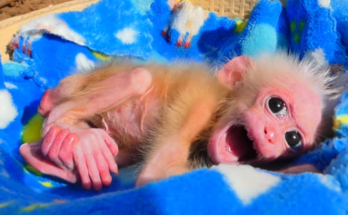
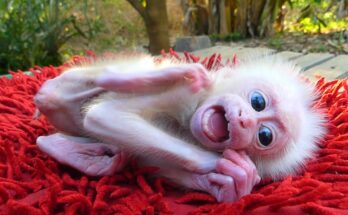
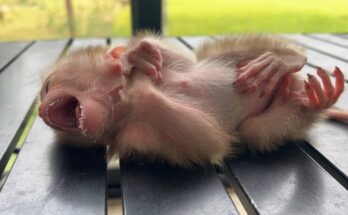
A sharp, frantic cry echoed through the canopy, followed by a soft, frightening thud on the forest floor. A newborn monkey, knocked from its mother’s grip during a panicked escape from a snake, lay stunned and wailing. Its mother, now high in a distant tree, called out but could not return through the predator’s territory. The infant was alone, vulnerable, and bleeding from a scraped limb.
From a nearby tree, another mother watched. She had her own infant clinging to her back. Hearing the desperate cries, she descended with careful grace. She approached the fallen baby, sniffing the air and the little one’s fur. Her own child peeked curiously over her shoulder.
With a surprising gentleness, this new mother reached out. She did not pick up the baby roughly. Instead, she groomed its head with a few calming licks, then carefully gathered it into the crook of her free arm, supporting it alongside her own infant. She picked up the baby monkey that its mother dropped, offering it a second chance at safety.
Carrying the double weight, she moved steadily back to the safety of the troop’s higher branches. The orphan, feeling the warmth and secure grip, stopped its frantic cries. While it would still need milk it could not get from her, the act of being picked up and protected provided immediate, life-saving sanctuary from ground-level dangers.
For the rest of the day, she allowed the orphan to cling to her chest, sharing her warmth and protection. It was an extraordinary act of cross-maternal compassion. She could not replace its mother, but in that critical moment, by choosing to pick up the baby monkey, she became its guardian, proving that in the complex society of the troop, the instinct to protect the vulnerable can sometimes extend beyond one’s own.