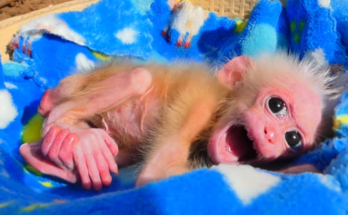
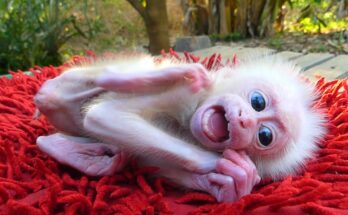
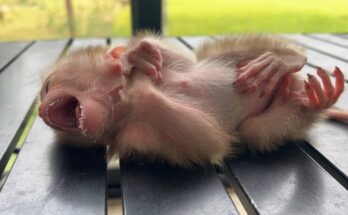
In the sterile calm of the wildlife clinic, a fragile life hung in the balance. The rescued baby monkey, named Kael, was too weak to lift his head. His body was shockingly light, a skeletal frame wrapped in thin fur, and his eyes were dull with exhaustion. Oral feeding had failed; he was too debilitated to swallow enough formula to reverse his decline. The only path forward was a direct lifeline: the infusion of protein and nutrition directly into his bloodstream.
The veterinarian prepared the intravenous line with meticulous care. This was not mere hydration. The clear bag contained a carefully calculated, life-giving cocktail: a balanced solution of electrolytes to stabilize his system, dextrose for immediate energy, and most crucially, amino acids—the building blocks of protein. For Kael, whose muscles had wasted away from starvation, this infusion was the essential foundation his body needed to stop breaking itself down and start rebuilding.
The procedure was a quiet drama. Kael’s tiny arm was gently shaved, and a minute catheter was inserted into a vein. As the first drops of the solution began to flow, the caregivers watched with held breath. This direct infusion of nutrition bypassed his non-functioning digestive system, delivering critical fuel straight to his cells. It was a medical shortcut to compensate for weeks of deprivation.
Over the next 48 hours, a slow transformation began. The profound lethargy that had gripped him started to loosen. The protein infusion worked at a cellular level, providing the material necessary to repair tissue and support organ function. It was a process unseen to the eye but vital for survival. His body, which had been in a state of shutdown, began to accept the nourishment.
Soon, the most hopeful sign emerged: a faint, rooting instinct. He turned his head toward a caregiver’s hand. The intravenous nutrition had provided the strength for his most basic reflexes to return. The team then carefully transitioned him from the IV to a specially formulated, high-protein milk via a syringe, which he could now swallow.
The infusion of protein and nutrition was the critical, invisible bridge between life and death. It did not cure him, but it gave his body the essential tools to begin curing itself. For Kael, that clear IV bag was not just medicine; it was the first chapter of his recovery, a scientific act of hope that translated into the steady weight gain and brightening eyes of a second chance.