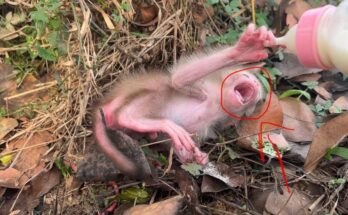
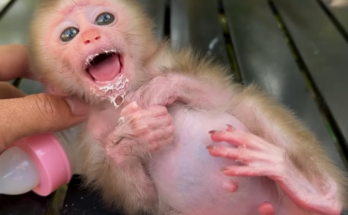
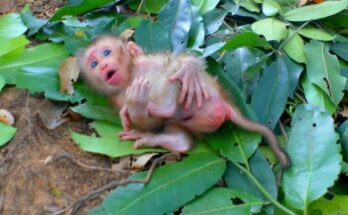
The little monkey, named Miko, sits apart from the troop, hunched and still. His usual playful chitters have fallen silent. His eyes are squinted, not with curiosity, but with a constant, wincing pain. The injury is hidden—a deep, ulcerated wound on the inside of his cheek or perhaps a broken tooth with an exposed nerve. Every movement of his tongue, every attempt to chew or even swallow, sends a sharp, burning jolt through his small face.
You can see his misery in his behavior. He might paw weakly at his own jaw, drool excessively, or refuse food entirely—even the ripest fruit—because the act of biting down is torture. He becomes dehydrated because drinking water stings. The injury, likely from a sharp stick, a hard fall, or even an infection from a minor scratch, has become a center of agony that dictates his every moment. He grows thin and weak, not from lack of food nearby, but because it hurts too much to eat.
When a rescuer finally examines him, the source of his suffering becomes clear. Gently opening his mouth, they might find an angry red abscess, a broken tooth, or a piece of debris lodged in his gum. The treatment is delicate but transformative. A caregiver will gently flush the wound with a sterile saline solution, apply a vet-approved antiseptic, and often provide a course of pain relief and antibiotics.
The change can be immediate. The relief from the cleansing and medication allows the inflammation to subside. Within hours, Miko might tentatively sip water. Within a day, he may accept soft mashed banana. The profound, guarded look in his eyes begins to soften, replaced by exhaustion and then gradual trust.
So, yes, it hurts. A mouth injury for a small monkey is a debilitating crisis. But with compassionate intervention, that acute pain can be managed, treated, and healed, allowing the little monkey to return to the vital, joyful business of being itself—eating, grooming, and chattering once more.