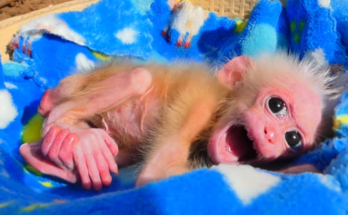
The first touch of warm water was a shock to his system. The little monkey, rescued just hours before, let out a sharp, piercing scream. It was not a cry of pain, but of pure, unadulterated terror. To him, water meant danger—a cold river current, a pounding rainstorm, the unknown. As the caregiver lowered him into the shallow basin, he screamed again, his tiny hands slapping the surface, his body rigid with panic.
He screamed while bathing, a continuous, high-pitched siren of protest. He screamed for the solid ground of the forest floor, for the familiar scent of his mother, for anything but this strange, wet captivity. Every pour of water, every gentle pass of the soft cloth, was met with a fresh, desperate wail. His eyes were wide, whites showing, locked in a primal fear deeper than any understanding.
The caregiver, Maya, did not rush. Her movements were a study in patience. She held him securely, letting him feel that he would not be submerged, that he was safe even in this scary new experience. She poured water in a slow, warm stream down his back, avoiding his face. Her voice was a soft, steady counterpoint to his screams—a low hum, a repeated whisper, “Shhh, little warrior. You are safe. This is helping you.”
Slowly, the chemistry of care began to work. The warm water started to soothe his sore muscles and wash away the itchy grime. His screams began to crack, interrupted by shaky breaths. The rigid terror in his limbs melted into exhausted trembles. The scream became a whimper, the whimper a sigh.
By the time he was lifted out and wrapped in a towel, the screaming had stopped completely. He was quiet, panting softly, his head resting against Maya’s shoulder as she dried him. The traumatic bath was over. In its place was a profound exhaustion and the first flicker of a new feeling: the realization that this terrifying ordeal had ended not in harm, but in warmth, cleanliness, and the gentle touch of someone who did not let go. The silence after the scream was the first true sound of trust.