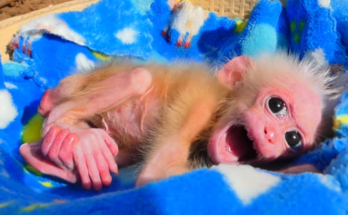
In the heavy silence of the forest at dawn, a sound broke through—a desperate, piercing, and relentless cry. Beneath the tangled roots of a banyan tree lay the source: a tiny, abandoned monkey. His fur was matted, his body trembling from cold and hunger. He was the very picture of a million pity, a soul so poor and forsaken that his entire being had become one single, loud plea. He was crying loudly for help, each shriek a raw, unmistakable signal of utter vulnerability.
He had been alone for hours, perhaps since the previous night. His mother was nowhere to be found—lost to predators, illness, or the brutal calculus of survival that sometimes leaves the weakest behind. The infant did not understand abandonment; he only understood a deep, terrifying absence. He cried for warmth, for milk, for the comforting grip of familiar arms. His cries were not quiet whimpers but loud, gasping wails that echoed, as if he were trying to fill the vast emptiness of the forest with the sound of his need.
His million-pity state was evident in every detail: his sunken eyes, his visible ribs, the way he clutched his own tail for scant comfort. Each cry seemed to drain him further, yet he could not stop. It was his only language, his only weapon against the creeping silence of death.
But his loud cries did not go unheard. The sound traveled through the clearing to a nearby forest patrol station. A ranger, brewing her morning tea, paused and listened. That particular distress call was one she had been trained to recognize. She followed the heartbreaking noise, her pace quickening with each desperate wail.
She found him—the poor abandon monkey, his voice now growing hoarse but still crying loudly. “Oh, you poor little thing,” she whispered, her heart aching with a million pity. With hands gentle as moonlight, she scooped him up and tucked him inside her jacket, against the steady drum of her own heartbeat.
The instant warmth and security caused a miraculous shift. The loud, frantic cries stuttered, then softened into shaky, exhausted hiccups. At the station, wrapped in a soft cloth and fed warm milk from a syringe, his cries finally ceased. The infant, named Aadi (meaning “beginning”), had been found. His loud cries for help had been a beacon, and a compassionate heart had answered. His million-pity story was no longer one of abandonment, but of a rescue that began the moment his voice refused to be silenced by the dark.