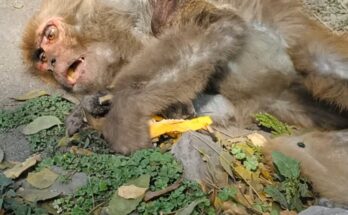
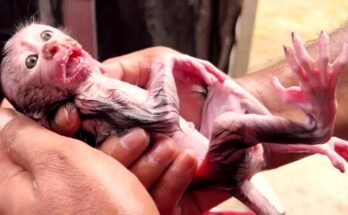
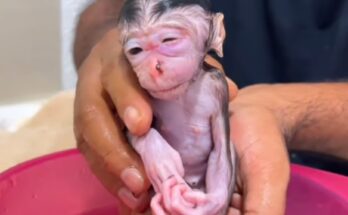
The image of a human feeding a baby monkey with a tiny bottle is one that tugs powerfully at our hearts. The question arises: why does humanity feel such a strong urge to do this, especially when the infant looks so pitiful? The answer lies in a complex mix of instinct, empathy, and a profound recognition of vulnerability.
Firstly, the “pitiful” look triggers a deep, instinctual caregiving response. A baby monkey’s large eyes, helpless posture, and distressed cries mirror those of a human infant, activating our biological drive to nurture and protect. This cross-species empathy is powerful; we see not just an animal, but a child in desperate need. When we see a skinny, crying, or injured orphan, our innate desire to alleviate suffering compels us to act. Feeding is the most direct, tangible way to answer that cry for help.
Secondly, this intervention represents a conscious step into the role of rescuer. In nature, a “pitiful” orphaned baby monkey would almost certainly die. By choosing to feed it, a human makes an ethical decision to interrupt the natural cycle of death, prioritizing individual life and compassion over Darwinian fate. We become its lifeline, and the act of feeding symbolizes hope, responsibility, and the belief that its life matters.
However, this compassionate impulse must be guided by knowledge. Responsible feeding is part of a larger rescue mission. It is not merely about soothing our own emotions at seeing a pitiful creature. In proper wildlife rehabilitation, feeding is the first critical step in a structured process that includes medical treatment, eventual weaning onto natural foods, and—whenever possible—preparation for a return to the wild. The goal is not to create a pet, but to restore a wild life.
Ultimately, when humanity sees a pitiful baby monkey and reaches for a bottle, it is an expression of our best nature: the capacity for compassion that transcends species boundaries. We feed it because we can, because its suffering moves us, and because we believe in offering a second chance. It is a gesture that says, “You are not alone,” turning a moment of profound pity into an active promise of care and survival.