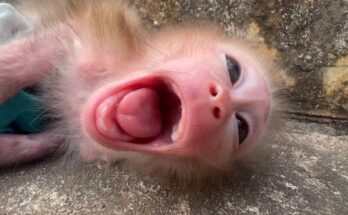
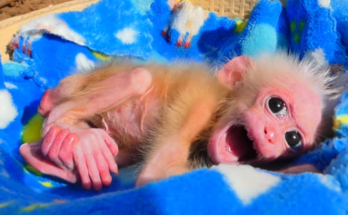
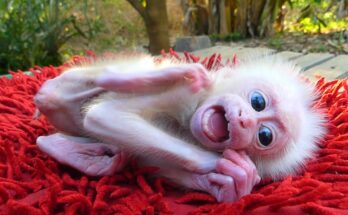
In the dappled light of the forest, a scene of profound distress unfolds. A newborn monkey, barely larger than a human hand, lets out thin, reedy cries. This is Baby BB, his tiny face wrinkled in desperation as he tries to nuzzle against his mother’s chest, seeking the warmth and nourishment that is his only need. His little hands, already strong with instinct, cling to her fur, while his high-pitched whimpers are a constant, pitiful soundtrack to his hunger.
Yet, his Momma remains a statue of indifference. She sits placidly, grooming her own fur or staring blankly into the canopy, deliberately shifting her body to break his feeble grip. Each time he manages to find a hold, she gently but firmly peels him away, ignoring his frantic attempts to latch on. The most fundamental bond of nature—that between a mother and her newborn—seems to have been severed, and the baby’s confusion is palpable.
His cries intensify, becoming sharp, screeching begs that seem to shake his entire miniature frame. He is not just crying for food; he is crying for connection, for the comfort that should naturally be there. He stumbles over her limbs, patting her belly, searching for the milk that is his birthright, but finds only rejection. The forest, usually a chorus of life, seems to fall silent around this small, private tragedy.
Is she a first-time mother, overwhelmed and unsure? Is she ill, or is there some hidden weakness in Baby BB that her instincts have identified? The reasons are a mystery, but the consequence is a cruel lesson in survival from the moment of birth. For Baby BB, the world is not a place of warmth and safety, but one of cold neglect. His continued, desperate cries are not just a plea for milk, but a heartbreaking attempt to remind his mother that he exists, that he is hers, and that he cannot survive without her.